
5 Train Tips in Germany You Never Heard Before
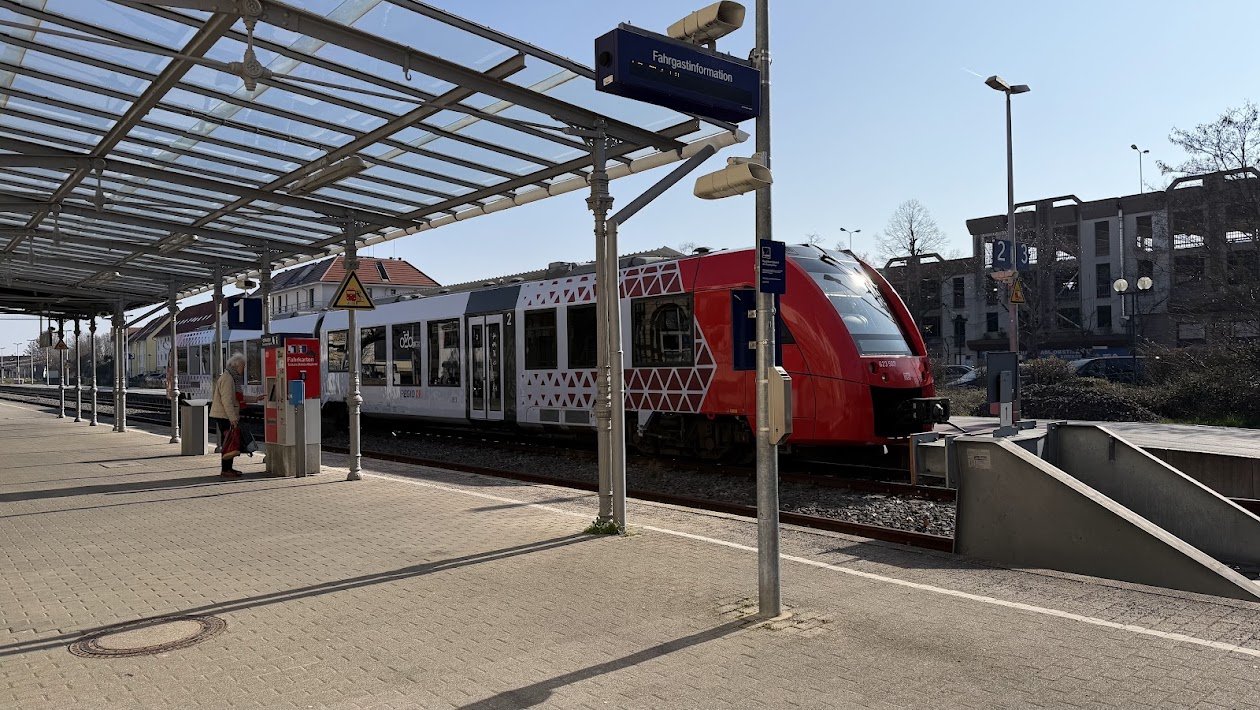
Train Tips You Never Heard Before
How to leave the car at home and cross the continent by rail, from someone who already lives at the crossroads
There is a moment on a European train when you look up from your coffee and have to pinch yourself, because you realize you are actually on a train in Europe, living the life you always dreamed about.
I love traveling by train, so I know firsthand the beauty of seeing Europe by rail. No roundabouts in a town whose name you cannot pronounce. No parking tickets or fender benders because the spaces are too tiny. A lot less of the stress that comes with driving on streets you do not know, terrain that fights you, and road signs in a language you are still learning.
That is the whole promise of rail here, and it is real.
But there is a catch. The system doesn't always run perfectly, and the small things nobody explains are exactly what turn a smooth trip into a stressful day. If you are still learning the basics, start with my free train guide. If you already have the basics down, here are the hidden tips that make the difference. Until you have stood on a platform, grateful you remembered your scarf and umbrella, you do not really know how these trains run.
My worst first train day, and why it made me a believer
Not long after we moved to Germany, I had to fly back to the States for work. My flight left at eleven in the morning, and I had booked an early train to the airport. We were less than a month into living here. I had taken a few regional trains by then, but nothing that prepared me for what happened.
The train stopped. There had been an incident with a person on the tracks. Believe it or not, this happens on occasion. The train was held at the nearest station and could not move until the investigation was finished.
We were in the middle of a tiny village. Now I know exactly where. Back then, I had no idea. I was worried. There were no taxis. No other trains. And I could not reach my husband.
But here is the thing. Most people are still genuinely good. People help each other here. It is a more social system, with less mind your own business and a lot more ein bisschen helfen, a little helping, in my experience, especially when there are other travelers around you, which there usually are on a train.
Long story short, the conductor helped about five of us wrestle our suitcases off the platform and call a taxi. We shared one to the airport, and by the time I reached the gate the staff ,was rooting for me as I ran for it. I made it through the door two seconds before it closed, the last one on before takeoff.
That day could have ruined train travel for me. Instead, it taught me the most important lesson on this whole list.
1. Plan for the unexpected, then be delighted when it all works out
If you take a lot of trains, one is eventually going to be late, or you will hit a day when half of them are canceled, and you are constantly rerouting yourself. I will not pretend otherwise. It is one of the real downsides of rail. The fix is not to avoid it, it is to be ready for it.
Download the app before you need it: get DB Navigator, or the national app for whichever country you are traveling in. (I put the full list in my Train Cheat Sheet.) When a train is late, and you miss a connection that was their fault, you usually do not need to hunt down a service desk and get formally rebooked. You find the next train in the app and get on it. That one realization changed how I travel.
Always have a plan B: on longer trips, I quietly bookmark an alternative route in the app before I leave, so if I miss a connection, I already know my backup instead of panicking on the platform.
2. Do not marry yourself to the fast train
The common assumption is that the ICE is always the better choice, because it is faster and fancier. Not always. Taylor Swift concerts, Oktoberfest, the Olympics, all the big draws: more than once, the ICE was so packed that I got off and hopped a couple of regional trains instead. It took a little longer, but I had a seat and a calm ride instead of standing in a crush.
This is a genuine hack when the network is having one of those days, where one delay triggers another, and the whole thing unravels. When you have to be somewhere, check the regional and local options too, not just the headline express.
It runs the other way, too. Sometimes a fast-train deal, like a group day ticket on the ICE for the region next to yours, comes out about the same as the regional fare, and sometimes it is simply worth a few extra euros to take the quick train. Always compare both before you decide.
3. Trains split, so stay observant
This one is confusing as fudge the first time. I ran into it the hard way on an early work trip in eastern Germany. A single train pulls into a station, splits into two, and each half continues to a different destination. If you are sitting in the wrong half, you are going to the wrong place.
It is easy to handle once you know how to watch for it. Learn to read the departure screens and the destination shown for your specific carriage, and listen for the announcement about which Zugteil goes where. (I walk through the screen wording in my Train Cheat Sheet.) Once you are on board, confirm your carriage continues to your final stop. No need to panic, only to pay attention.
4. Book direct with the country you are actually riding in
Unless you are crossing several countries on a rail pass, book each leg directly with the railway that runs it. When I am heading to Switzerland or France, I always compare the national long-distance trains against DB. (Yes, that is in the cheat sheet too.)
But this is less about price than about flexibility, and flexibility is everything on the bad days from tip one. The operator you booked with is the one who can help you when plans change. If you booked a Swiss leg through DB, Swiss Rail will generally not touch that reservation, and the reverse is true as well. Book direct with SBB, and SBB can rebook you. That difference is worth far more than a few euros when a connection falls apart.
5. Pay for the flexible fare, not just the cheapest one
This is the big one. Unless I am traveling in the next day or two, I always book the flexible fare. The super saver price is wonderful, and the savings are real, but it is locked to specific trains and unforgiving. And here is what nobody tells you: you will want to change your return. Plans shift, a day runs long, you fall for a town and stay another night. The flexible fare is the small insurance premium that lets you.
That first disastrous train day did not scare me off. It showed me that the system, delays and all, is held together by people who help, and that a little planning turns almost any mess into a story you tell later. Leave the car. Take the train. The rest of Europe is closer than you think.
Life You Find
#LifeYouFind #TrainTravel #Europe #SlowTravel #ExpatLife #TravelTips #Germany #TravelEurope
Shared in good faith, for information only. Fares, ticket conditions, reservation rules, and operator policies vary by country and change over time. Always confirm current details on the official operator websites before you travel.
Related Posts


Donec id justo non metus auctor commodo ut quis enim. Mauris fringilla dolor vel condimentum imperdiet.