Medieval Festivals in Germany: They are Not Renaissance Fairs
If a Renaissance fair back home is your only reference point, the German version will reset your expectations. Same instinct, different century, and the castle is real. Here is what actually happens when the season runs, and which events are worth the drive.
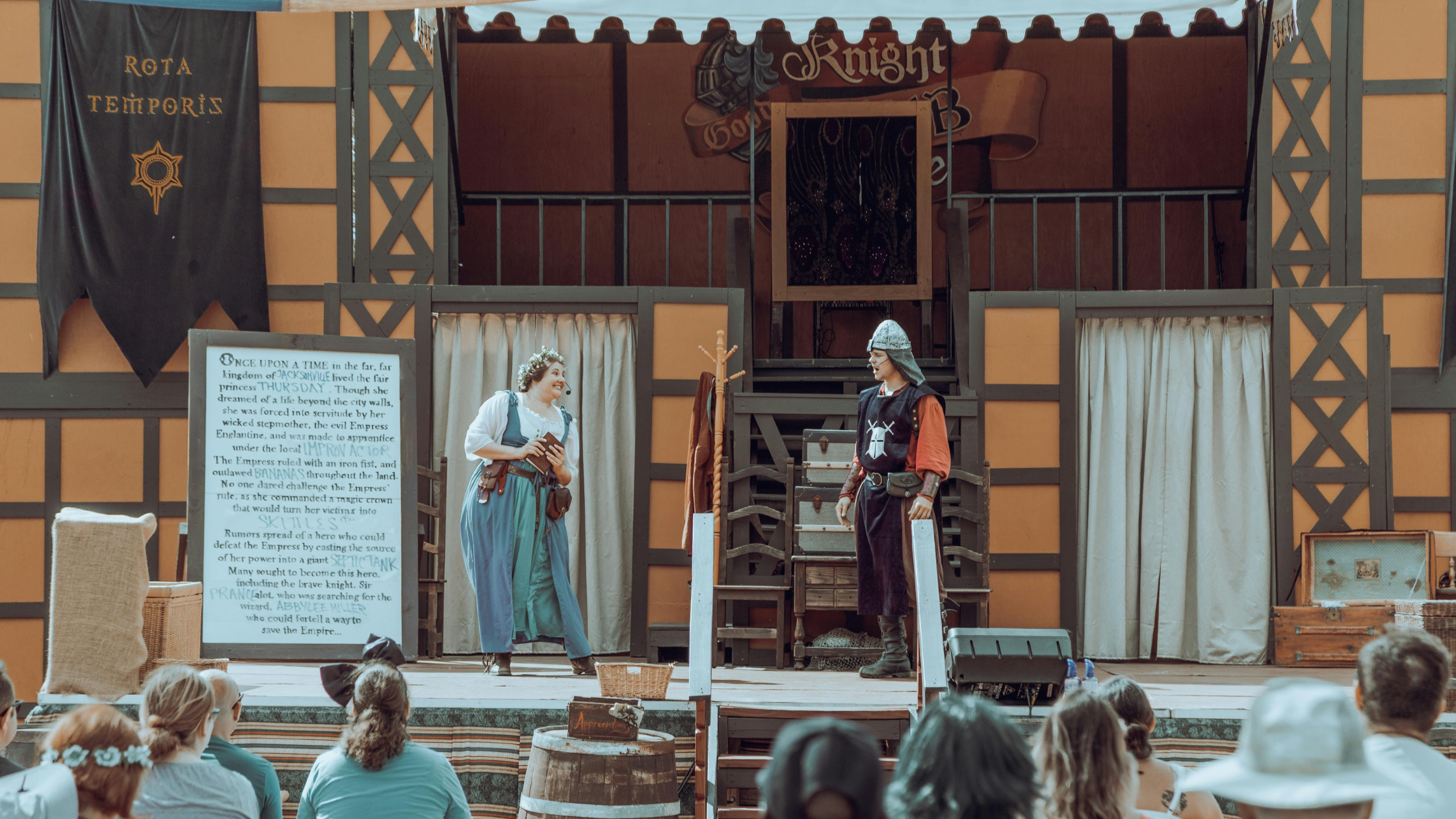
A Renaissance fair back home is Tudor England with a turkey leg. Roughly the 1500s, roughly Elizabethan, built on a fairground for six weekends and then packed into a trailer.
A German Mittelaltermarkt dates back further than that. Knights instead of courtiers. The Middle Ages, rather than the Renaissance. And the setting is rarely built for the occasion. It is a fourteenth-century castle that has been standing on that hill the entire time, and the market simply moves in for a weekend.
That one difference changes everything about how the day feels.
What actually happens
It varies by event, but the shape holds:
Roast meat over an open fire, Baumstriezel turning on the spit, mead and dark beer poured into a clay mug, you pay a deposit on.
Live entertainment: jugglers, fire shows, staged sword fights, and bagpipe-heavy medieval rock played loud
People are fully dressed. Not only the performers. A good share of the paying crowd shows up in garb.
Things to actually do: archery, axe throwing, kids’ quests, and knighting ceremonies.
Artisan vendors selling leather, forged iron, wool, horn cups, and jewelry made in front of you.
A ‘Lager’, the encampment where reenactors sleep on site for the whole weekend, and will happily talk your ear off about their trade.
The Lager is what sets this apart from a theme park. Those are not employees on a shift. They are hobbyists who spent two years hand-stitching a tent or a costume, and they want you to ask.
The first one I attended was in Speyer. One of the most spectacular in the region, the park was huge. Everyone was dressed up in costumes. I felt odd not dressed up. It was so fun for the kids. Our friends’ families were running around, sharing food, and in general just enjoying a great day.
Why does Germany do this so well?
Germany has thousands of castles and a long list of towns whose street plans have not changed since the market square was an actual market square. These festivals are not inventing fantasy out of nothing. They are borrowing back the original venue.
Timing follows the castles. Many castles and attractions reopen around Easter weekend, and that is when the season truly begins. It runs through summer, peaks in high summer, and tapers off in early autumn. Then it comes back around in a different coat: some of the most photographed medieval markets of the year are the ones attached to Christmas markets.
The big ones, worth planning a trip around
Mittelalterlich Phantasie Spectaculum (MPS)
The touring one is refreshingly honest. Its own motto translates to roughly "not authentic, but fantastic." Running since the mid-1990s, it moves across a set of sites in Germany during the warm months, with big stages, mounted tournaments, well over a hundred market stalls, and a music lineup that goes full medieval rock. The Speyer stop is the one within easy reach of here, usually in late summer. Locations and the number of weekend shifts vary from season to season, so check the tour list rather than assuming.
Kaltenberg Knights’ Tournament, Bavaria
Three weekends in July at Schloss Kaltenberg, west of Munich, run by the Bavarian royal family since 1980. This is the one to see if you only see one. The jousting is performed by professional stunt riders on a scripted storyline with pyrotechnics, closer to a live film than a demonstration, and there are over a thousand costumed performers on the grounds. Sunday is family day and ends with the children’s tournament, where the kids get knighted themselves.
Burg Satzvey, North Rhine-Westphalia
A moated castle near Mechernich, fourteenth century, is still the home of the same family that has held it for centuries. The Ritterfestspiele run twice a year, in spring and again in September, with a large market, knight camps, and a stunt show. Then the castle keeps going all year: a children’s knight fest, Halloween, and a Christmas market inside the walls. It is one of the few places on this list where you can go looking for medieval in November and still find it.
Annotopia
Worth being clear about what this actually is, because the name gets grouped in with the rest. Annotopia is a fantasy festival, not a medieval one. Knights share the castle grounds with Star Wars cosplayers, steampunk, Vikings, pirates, and dinosaurs. It runs at several castles from late spring into early September. If you want a strict medieval event, this is not your event. If you have a teenager, this might be the best one on the list.
Wallenstein, Memmingen
The outlier twice over. It happens only every four years, and it is not medieval. It reenacts the year 1630, deep in the Thirty Years’ War, when the imperial commander Wallenstein quartered his court in the town. What makes it worth the drive to Bavaria is who performs it. Over four thousand participants and three hundred horses, and the cast is the town itself: the baker, the teacher, the dentist. It is billed as the largest historical festival in Europe, and it earns the label. Check whether you are in a Wallenstein year before you plan around it.
Close to home in Southwest Germany.
You do not need to cross the country. The season starts in our own backyard.
Burgerlebnistage, Burg Nanstein, Landstuhl. The ‘Burgerlebnistage’ take over the ruin in the first days of May, put on by the local ‘Heimatfreunde’. Falconry, a rope maker, a stonemason, a smith, archery for the kids, and axe throwing for the adults, and a fire show after dark. The castle belonged to the knight Franz von Sickingen, and the local feeling about him is not positive. Small, family-run, and cheap. This is the one I send new arrivals to first.
Freisen, Saarland. A spring market on the Naturwildpark grounds around the start of May, and another in the summer. Woodsmoke, wild boar sausage, Baumstriezel, and a lot of families.
Gelterswoog. A lakeside market in spring and again in autumn, close enough to Kaiserslautern that you can walk it off afterward.
Gartenschau Kaiserslautern. Hosts a medieval weekend in May, which pairs well with the dinosaurs the kids came for anyway.
Hockenheim. A medieval market in June, an easy day trip east.
Speyer. The MPS stop, usually late summer, with the cathedral in the background.
Dates, and even whether an event happens at all, change from year to year. Every one of these is run by a ‘Verein’ or a family, not a corporation, so check the listing before you drive.
Medieval, when it is not festival season
The costumes come out for a weekend. The castles are there year-round, and a fair number of them lean into it.
Medieval dinners at castles. Cochem on the Mosel is the well-known one: multiple courses, no cutlery to speak of, and a lot of commitment from the staff.
Night watchman tours: half history, half theater. Almost every walled old town has one, and the good ones are genuinely funny.
Fortress reenactments. Ehrenbreitstein above Koblenz runs living history days on the ramparts.
Winter markets with medieval quarters. Plenty of Christmas markets carve out a section with open fire, mead, and no electric lights. It is the same market in a heavier coat.
There are several Medieval Christmas markets, but my favorite is not the largest or most over-the-top. It was a small paid area in Dresden. The atmosphere, the decorations, and the staff made it seem like a tiny Medieval town in the middle of the huge city. It was an amazing spirit of dancing and having a great time. The food was incredible, and we just loved it.
How to actually do one well
Bring cash. Many stalls and camps do not accept cards, and some events use their own token currency.
Expect a mug deposit. You pay for the clay cup;you get it back when you return it, or you keep it. Either is fine.
Wear boots. These are castle grounds and grass fields, not paved midways, and one rainy morning turns everything to mud.
Go Friday evening or Sunday. Saturday afternoon is the crush. Friday nights skew adult and atmospheric, Sundays skew family.
Ask before you photograph the camps. Most reenactors are delighted. Asking is what makes them delighted.
Check the dog policy every single time. It varies by event and sometimes by day.
KOBE’S VERDICT
He stays home for these, and he is not thrilled about it. Fire shows, horses in an arena, drums, and a crowd packed shoulder to shoulder between market stalls is a lot to ask of a dog, and plenty of the bigger events do not allow them at all. The smaller local markets are more relaxed about it, but the policy changes event to event, so confirm before you load him in the car. Verdict: a rare no.
Quick Answers Before You Go
What is a German medieval festival?
An event that recreates a medieval market, camp, and tournament, usually on the grounds of a real castle or in a historic town. Expect food cooked over an open fire, artisan vendors, live music, staged combat, and reenactors camping on-site. Most last two to four days.
How is it different from a Renaissance fair?
It reaches back to an earlier period, the Middle Ages rather than the Elizabethan Renaissance, so the focus is on knights, castles, and craft rather than courtiers and Shakespeare. The venue is usually an authentic historic site rather than a purpose-built fairground, and a large share of visitors arrive in costume.
When is medieval festival season in Germany?
It opens around Easter weekend, when most castles reopen for the year, builds through spring, peaks in July and August, and tapers through September. A second wave arrives in December, when many Christmas markets add a medieval section.
Are medieval festivals in Germany good for kids?
Very. Most have hands-on programs built for children: archery, quests, craft stations, and knighting ceremonies. Sundays are usually the designated family day at the larger events. The fire shows run after dark, so a Sunday afternoon visit skips them if that matters.
Where can I find medieval festivals near Kaiserslautern?
The closest are Burg Nanstein in Landstuhl in early May, Gelterswoog in spring and autumn, a medieval weekend at the Gartenschau Kaiserslautern in May, Freisen in Saarland in spring and summer, Hockenheim in June, and the MPS stop in Speyer in late summer. Exact dates move each year, so check the organizer listing before you go.
#LifeYouFind
Werbung: this post may contain affiliate links. If you book or buy through one, I may earn a small commission at no extra cost to you. Everything here is shared in good faith, based on my own experience.
Event dates, programs, and policies vary by location, year, and season. Always check the official listing before you travel.
Related Posts